The invitation says "black tie optional," the suit is pressed, the shoes are polished. Then comes the small decision that quietly shapes the whole look: the watch on your wrist. Silver — whether polished stainless steel, brushed steel or sterling silver — reads as clean, calm and formal in a way that heavy black cases and bright gold rarely do. It sits well against a white shirt cuff, it photographs beautifully under warm reception lighting, and it works just as convincingly on a woman's wrist as a piece of jewelry as it does on a man's.
What follows is about matching that watch to the occasion: the dress code on the invitation, the jewelry you already wear, the length of the day, and the moment the dancing starts.
Start with the metal, not the logo
Most watches described as silver have stainless steel cases. That is good news. Steel is durable, holds a polish well, resists daily wear and does not need much looking after. Sterling silver cases exist too, and they arelovely — warmer in tone, softer in the hand — but the metal is softer and tarnishes over time, so a silver watch tends to be a piece you wear for occasions rather than one you knock against door frames all week.
Finish matters more than most buyers expect. A high-polish case catches light and feels dressier; a brushed or satin finish is quieter and more versatile. For an evening wedding, polish has the edge. For a daytime ceremony in a garden, brushed steel looks more relaxed and less fussy in photographs. Dials follow the same logic: silver-white, off-white, cream and pale grey all sit comfortably with formal clothing, while strong colours and busy sub-dials pull the eye exactly where you may not want it during a ceremony.
Read the dress code before the watch
The invitation is your brief. A watch that is perfect for a cocktail reception can look out of place at a formal evening ceremony, and the reverse is just as true. As a working rule:
- Black tie and white tie: a slim case, two or three hands, no chronograph pushers, a plain dial and a black leather strap. Understated is the whole point.
- Formal or black tie optional: the same restraint, with a fine steel bracelet acceptable if the links are narrow and unadorned.
- Cocktail and semi-formal: more freedom. A slightly larger case, a textured dial or a mesh bracelet all work here.
- Daytime ceremonies and garden weddings: steel bracelets, lighter dials and simpler sport-adjacent designs fit without looking careless.
- Evening receptions: keep the metal bright and the strap dark. This is where a polished silver case does its best work.
Two things stay constant across every code: avoid bulky sports watches with a dinner suit, and avoid anything that beeps, glows or counts steps with formal wear.
For men: the watch under the cuff
The single most useful measurement is thickness, not diameter. A dress watch in the 36–40 mm range with a slim profile will slide under a shirt cuff and let the sleeve fall cleanly. A thick case catches on the cuff, pushes it up, and ruins the line of the jacket sleeve — a small detail that shows in every photograph.
Match the strap to your leather. A black strap with black shoes and a black belt, a dark brown strap with brown shoes. It is an old rule, and it still works because it keeps the eye moving without interruption. If you prefer a steel bracelet with a suit, choose one with a tapered, close-fitting link rather than a chunky sports clasp.
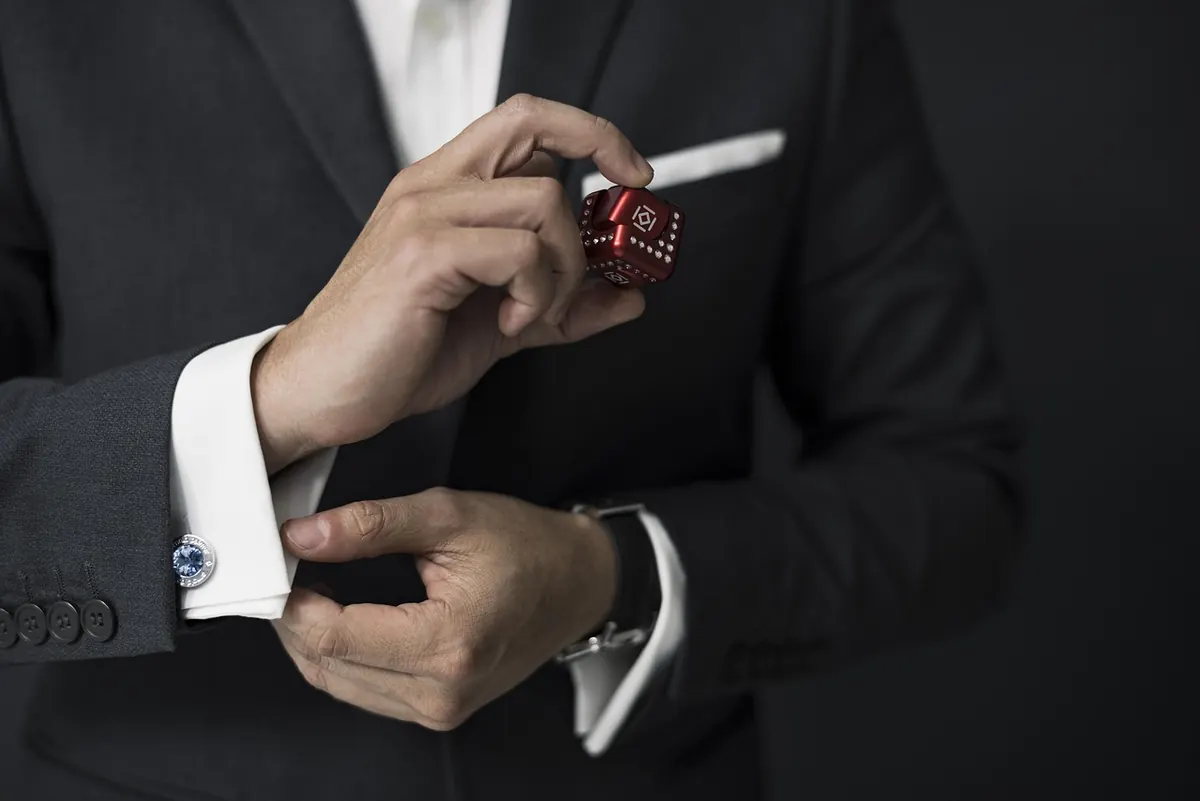
Balance the details. If your watch has a textured or patterned dial, keep your cufflinks plain. If you are wearing a silk pocket square, a plain silver dial keeps the chest area from competing with itself. And check the fit of the bracelet before the event: a watch that rotates around the wrist all evening is a distraction you will feel every time you raise a glass.
For women: wear it as jewelry
A silver watch on a woman's wrist is a bracelet first and a timekeeper second, so treat it that way. Delicate cases of roughly 26–32 mm on a fine link bracelet or mesh strap disappear elegantly under a sleeve and look intentional beside a ring. Larger cases make a stronger statement and suit a minimal outfit — a column dress, a simple neckline, no necklace.
When pairing with other silver jewelry, repeat the finish. High-polish earrings with a polished watch, or brushed pieces together. A thin silver bangle stacked with a small watch can look wonderful, but stop at two or three pieces in total; more and the wrist becomes noisy, especially in photographs where hands are often near the face.
If you are a guest, let the bride have the shine. If you are the bride, a small silver watch — or a family piece — is a practical, quietly sentimental choice that also tells you when to start the first dance.
Mixing metals without it looking accidental
Silver and gold can live together, but the mix should look deliberate. The simplest method is repetition: if you wear a silver watch and a gold wedding band, add one more gold detail — small earrings, a hairpin, a bracelet — so the second metal appears at least twice. A single stray gold item against an otherwise all-silver look tends to read as an oversight rather than a choice.
Couples often ask about coordinating. Do not buy identical watches. Coordinate the finish instead: two polished silver cases, or a silver watch and silver cufflinks, look connected without looking staged.
Straps, clasps and comfort on a long day
Weddings are long. Ceremony, photographs, dinner, dancing, and a lot of standing. A few practical choices make the difference between a watch you forget you are wearing and one you keep adjusting.
- Heat and hands: leather straps absorb moisture and can feel clammy by evening; a steel bracelet wipes clean in seconds.
- Clasps: a deployant clasp is easier to take on and off than a pin buckle and puts less stress on the leather.
- Sizing: have links removed or added a week before, not on the morning of the event.
- Water: you will wash your hands, help with decorations and possibly stand in a drizzle — check the watch's water resistance rating on the case back before relying on it.
- Setting: wind or set the watch the night before. Adjusting it during the ceremony is the one moment everyone notices.
A final check before you leave
Try the whole outfit on together at home, in daylight and under a lamp, with the watch on the wrist. Then run through this:
- Does the case slide under the shirt cuff without pushing it up?
- Does the strap or bracelet match your shoes and belt, or your other jewelry?
- Is the dial calm enough for the dress code on the invitation?
- Is the bracelet snug enough to stay in place through a handshake and a dance?
- Have you repeated any second metal at least once elsewhere?
- Is the watch set, wound and clean — no smudges on the crystal?
Get these right and the watch stops being something you decided and becomes part of how the outfit reads: quiet, considered, and finished. That is exactly what a silver watch does best.
Photo: GLITZCUBE / Pixabay