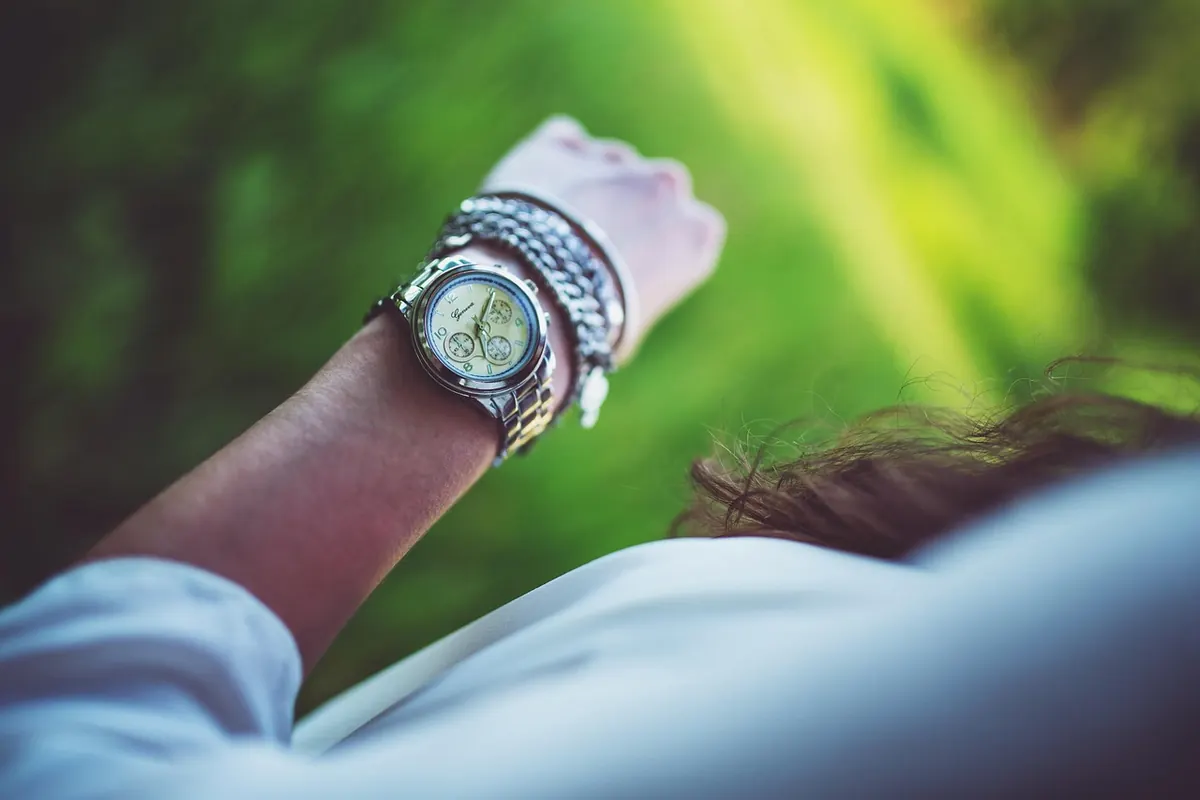
Summer strips a watch down to essentials. Sleeves disappear, cuffs stop hiding the case, and whatever sits on your wrist is on display from the first coffee to the last walk back from the beach. Silver watches handle that exposure well. The metal stays bright in strong light, looks clean against tanned skin, and moves from a linen shirt to swimwear without announcing a costume change. The catch is that warm weather asks more of a watch than winter does: more sun, more salt, more chlorine, more sunscreen, and far more hours outdoors. Style and care become the same conversation in July. What follows is how to choose straps, read water-resistance figures with a bit of scepticism, and keep a silver case looking sharp through a long, bright season.
Why Silver Works When the Temperature Climbs
Silver-toned metal behaves well in bright light. A polished bezel throws light back at the eye; brushed flanks absorb it and look quieter. That contrast is why a simple steel watch with a white or silver dial reads as fresh in July, while the same watch on a dark leather strap in December reads as formal.
There is a practical side too. Warm metals can compete with sun-warmed skin and with the sandy, terracotta palette of summer clothing. Silver stays out of that argument. It sits comfortably next to ecru linen, faded indigo, sage green, and plain white cotton — the colours most of us actually wear when it is hot.
One distinction worth knowing before you pack a bag: not every silver-coloured watch is silver. Most are stainless steel, which shrugs off salt water and sweat with little complaint. Sterling silver, marked 925, is softer, tarnishes, and wants more attention near the sea and the pool. Neither is better; they simply need different treatment. Check the caseback before you assume.
Start With the Strap, Not the Case
The strap does more seasonal work than the dial ever will. Change it and one watch covers a beach morning and a restaurant evening. A sensible summer rotation is two or three straps, not eight.
- Steel bracelet: The default for good reason. It tolerates water, wipes clean, and looks correct with everything from a polo shirt to a linen overshirt. Brushed finishes hide fingerprints and sunscreen smudges better than mirror polishing.
- Milanese mesh: Thinner and more elegant than a link bracelet, and the fine texture pairs neatly with linen. Choose one with a proper clasp rather than a simple buckle, and rinse it — mesh traps salt in its weave.
- Textile, perlon, or a simple NATO: Light, breathable, and cheap to replace. Perlon is the tidiest option because it has no loose tail. Faded stripes work in summer; bright primary colours date quickly.
- Rubber or FKM: The right answer for swimming and humidity. It does not stay damp against the skin the way fabric does.
- Leather: Use sparingly. Sweat, salt, and sun dry leather out and darken it unevenly. If you love a leather strap in summer, keep a spare and expect to replace it.
Quick-release spring bars make swaps a ten-second job, which matters more than it sounds: you will actually change the strap instead of meaning to.
Linen: The Easiest Pairing You Own
Linen is wrinkled, textured, and slightly irregular, and it makes almost any watch look considered. The trick is not to fight that texture.
Keep the case simple. A thin bezel, a clean dial, and a modest diameter sit better against a rumpled sleeve than a chunky sports watch with three sub-dials. A white or off-white linen shirt with a silver case and a mesh bracelet is about as reliable as summer dressing gets; a stone or sage linen shirt works nicely with a grey perlon strap.
Watch the cuff. A watch worn over a linen sleeve bunches the fabric and looks bulky, so roll or push the sleeve up and wear the watch below it. Navy linen with a polished case and a dark textile strap looks deliberate; the same shirt with a black croc-textured leather strap looks like a mistake, because glossy formal leather and crumpled summer fabric are having two different conversations.
Swimwear, Salt Water, and What the Number Means
Water resistance is the one spec you should understand before you get in the sea. The figures are based on static pressure testing, not on a day of swimming, diving under waves, and slapping your arm against the water.
- 3 ATM / 30 m: Splashes, rain, hand-washing. Not swimming.
- 5 ATM / 50 m: Showering and short surface swimming. Fine for a pool, less so for surf.
- 10 ATM / 100 m: Comfortable for swimming and snorkelling.
- 20 ATM and above: Built for real water use, including diving.
Two habits matter more than the number. First, make sure the crown is pushed in or screwed down before you go near water, and never operate the crown or pushers while wet. Second, treat "water resistant" as a maintenance promise rather than a permanent property: gaskets age, and a watch that swam happily two summers ago may not be sealed today.
Chronographs with push-buttons deserve extra caution. Unless the buttons are specifically designed for underwater use, leave them alone at the beach.
Sun, Sunscreen, and the Care Routine That Works
Very little of summer damage comes from one dramatic event. It comes from accumulation: salt drying in the gaps between links, sunscreen collecting around the caseback, a watch left on a car dashboard for an afternoon.
- Rinse the watch in fresh water after every sea or pool session. Lukewarm, not hot, and work the bracelet links apart under the tap.
- Dry it with a soft cloth, including the clasp and the spaces between links, so water does not sit and dry into marks.
- Keep sunscreen, insect repellent, and tanning oil off the case. If they land on it, wipe rather than rub — some formulas are difficult to remove from brushed metal once they set.
- Do not store it on a sunny windowsill, a beach towel, or a dashboard. Heat is harder on gaskets and dials than most people expect.
- If you swim often, have the seals checked periodically by a watchmaker. It is inexpensive and prevents the expensive kind of problem.
- For sterling silver cases, add a soft polishing cloth to your bag and accept a little patina. Tarnish is normal, not a defect.
Denim, Tees, and Shorts: Casual Done Right
Casual summer outfits give a silver watch room to be the only intentional thing you are wearing. A dive-style watch on a steel bracelet with a white tee and faded jeans is a formula that has never really failed. A simple field watch on a textile strap works with chinos and a short-sleeved shirt; a slim dress watch on mesh lifts a plain linen set without looking fussy.
Pay attention to fit. Wrists swell in heat, and a bracelet that sat perfectly in April can leave marks by August. Use the micro-adjustment on the clasp, or move to the next hole, and give yourself a little slack — a watch should move slightly on the wrist but not spin. Loose bracelets are also how watches end up in the sand.
A Short Summer Checklist
Before the season gets busy: confirm your watch's water-resistance rating and that the crown seals properly; swap the leather strap for steel, mesh, or rubber; rinse and dry the watch after every swim; keep it out of direct sun when you are not wearing it; and check the bracelet fit on the first genuinely hot day rather than the first cold one. Do those five things and a silver watch will carry you from breakfast to the last swim of the evening without a scratch, a stain, or a second thought.
Photo: StockSnap / Pixabay